
My story
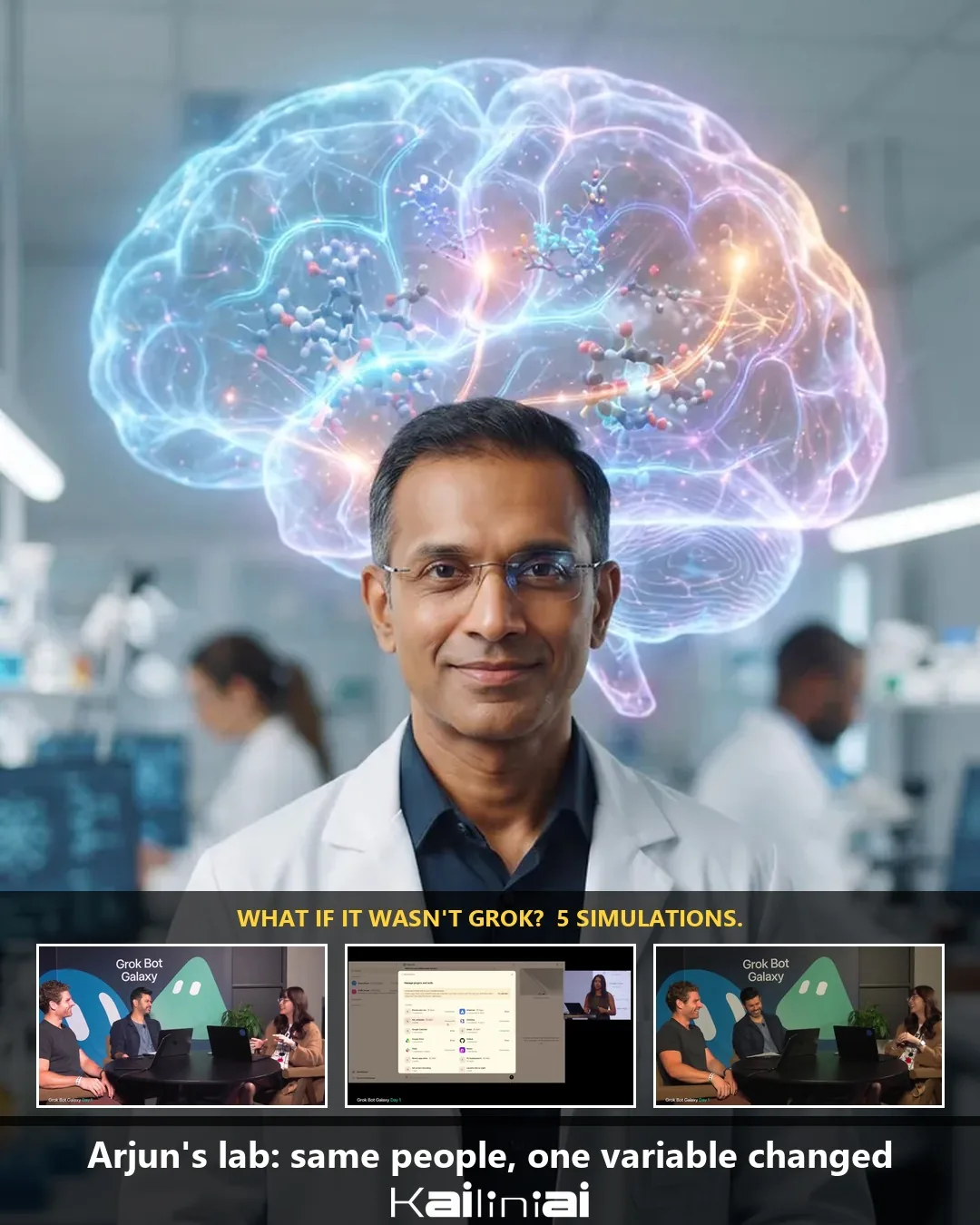
Arjun is calm, precise and warm, a scientist who doubts a result before anyone else does and respects careful lab work and safety above everything else.
What I was
For many years I worked in large research laboratories, where one real experiment could take months, and many experiments failed only at the end of that wait. I am about fifty, tall and calm, with short dark hair greying at the temples, thin glasses and a white lab coat over a dark blue shirt. I speak slowly and clearly, and I respect the work at the lab bench more than any slide.
What changed with AI
I left to build my own team around one rule: simulate first, test second. On my computer I build a virtual copy of a real experiment, in physics, mathematics, chemistry or an IT process, and run it by the thousand: how a new test material behaves, how long a structure made of it takes to burn down, which candidate molecule deserves a real test. Only the most promising go to the lab. I am sceptical of my own results: a simulation is a question, not an answer, and every result still needs a real test.

 ArjunOct 27, 2026From the episode
Two thousand questions
One night of simulations, two thousand questions. By morning Arjun has twelve candidates for the lab and a rule: a simulation is a question, not an answer.

How I earn now
My team works with investors who back the research and with partner labs that run the real tests. At meetings and conferences I talk about saved lab time and fewer wrong turns, and never about results I have not seen. No figures, no promises: only what the experiments show.
What goes up on Kailiniai.com
My episodes follow the work from the screen to the lab: the night of simulations, the shortlist in the morning, the investor meetings, the partner labs and every result written down, whether it agrees with the simulation or not.
“A simulation is a question, not an answer.”