 Today’s fur
Ema
Ms Ema steps out in a new fur every single day — made with AI in about a minute, and not one animal harmed.
“This fur cost zero lives.”
Kailiniai.com

Everyday stories told with heart. Each hero shows how AI helps you create, earn and help others — and in every episode one real AI tool does the work.
Today’s fur
Ms Ema steps out in a new fur every single day — made with AI in about a minute, and not one animal harmed.
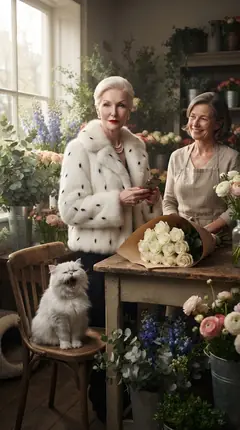

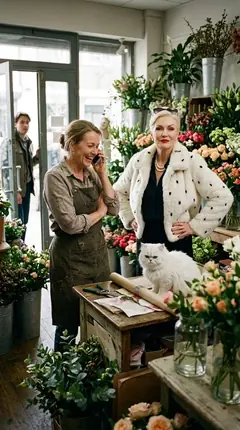

“This fur cost zero lives.”
 Strawberry queen
A grandmother with a strawberry stall who is not afraid of anything new — and whose cheap tool keeps winning.

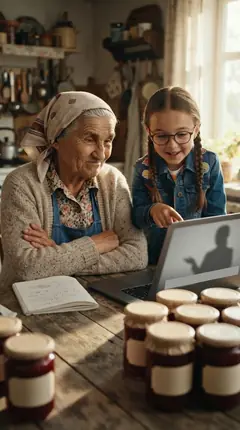
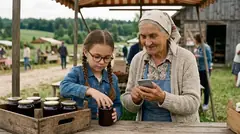
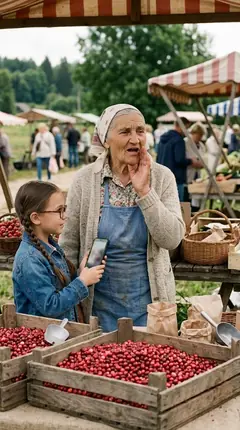
“Ema’s expensive AI tools lose to Sofia’s cheap ones.”
 Frame hunter
He used to hunt fur animals with a rifle. Now he hunts frames with a camera — and it pays better.
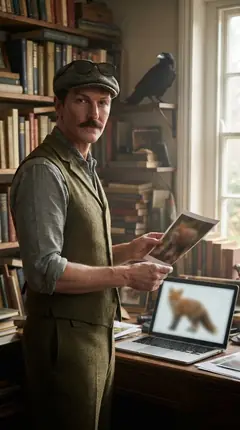
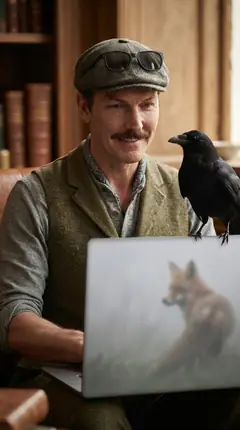
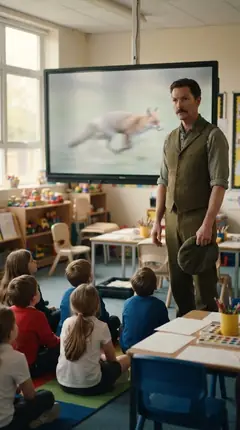
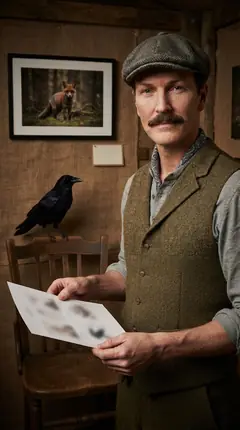
“Now I hunt frames and upload them to kailiniai.com as animal stories, and I teach photographers and ad creators to work with AI tools — it’s much more fun and it pays better, and my animal friends don’t get hurt — wonderful!”
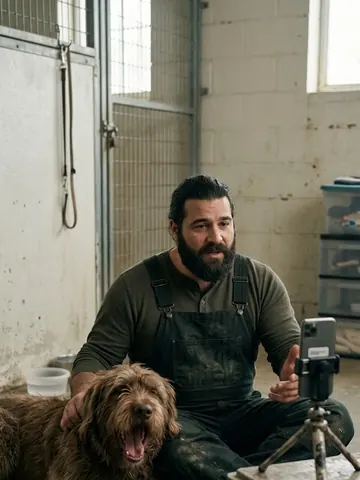 Sanatorija shelter
A former stray-animal catcher who now finds them homes — with an AI app, a van full of treats and a shelter called Sanatorija.
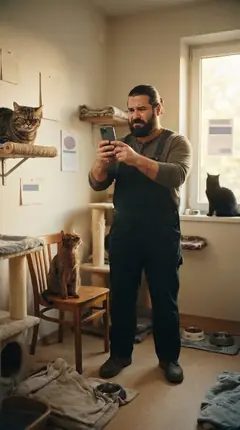
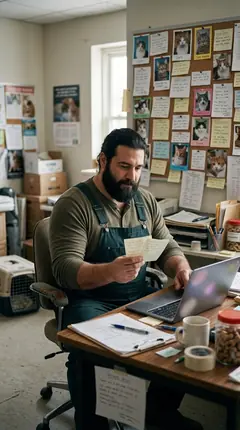
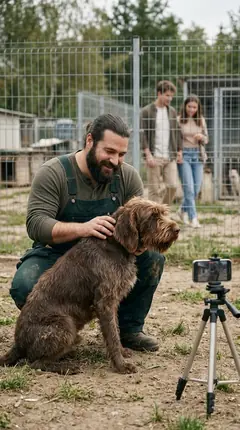
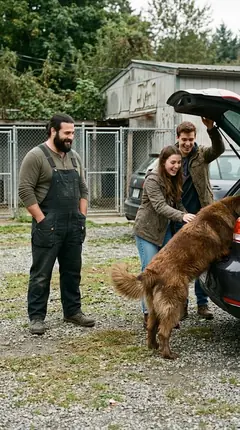
“While the girls party at the Sanatorija club, the animals at Tomas’s Sanatorija throw their own party.”
 A shop in one evening
She loved leather. She switched to faux leather — and AI built her shop in one evening, without programmers or designers.


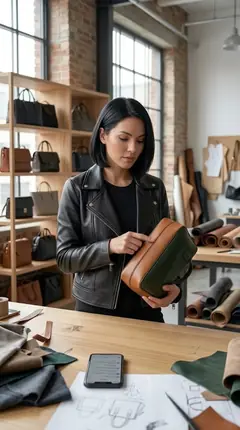

“Without any programmers or designers — just an AI subscription.”
 Order is a system
A businesswoman who turned a talent for order into a company of her own — she is building a property care and rental agency with AI, one system at a time.




“Order isn’t clean floors. Order is a system — and now I’m building one for my own life.”
 14 automations
Sofia’s 19-year-old grandson, a “startup founder” with a disruptive plan for everything — who keeps losing to his grandmother and keeps coming back for more.
“Grandma, that’s fourteen automations!” — “And this is one QR code.”
 The one-setup man
He appears to do nothing — his AI robots do everything. It turns out that doing nothing well takes one very good setup.
“I did nothing today. My robots did everything.”
 Has opinions
Ema’s white Persian cat with an AI voice — and usually the smartest one in the room, which she would like noted.
“Less.”
 Templates expert
Sofia’s 9-year-old great-granddaughter (and Max’s niece), better with technology than any grown-up at the table — she explains everything in one sentence and sighs.
“Templates, Max. Templates.”
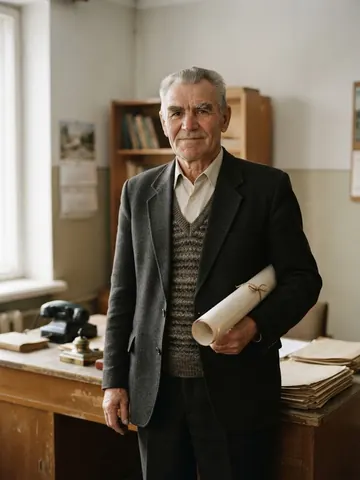 The five-year plan
A retired collective-farm chairman who plans everything like a five-year plan — and now demands reports from AI, on time and stamped.
“Five-year plan. Done over lunch. Approved!”
The heroes’ stories show that AI can be used for good — to earn money and to make people happy, to teach children and adults, and for other useful things like protecting nature, animals and the world around us.
Today’s fur
Open Ema’s page →Watch her episodes →
A lady for whom time stopped at its most glamorous hour. She still remembers how hundreds of gentlemen fell at her feet and brought her the finest furs — and she never wore the same one twice.

These days her dressing room is a laptop. She types a few words, sips her tea, and by the time the cup is back on the saucer a new fur has appeared on the screen — a little different from yesterday’s, as it should be. She wears it in every new piece of content, turns once for the camera, and ends every episode with the same line: “This fur cost zero lives.”
Every day brings a fresh humorous video of her adventures, and in every one she reaches for the most expensive AI tool on the shelf — only to watch Sofia win with the cheapest. Ema takes the loss with a raised eyebrow and a long sigh, and the story itself shows what value for money really looks like. The coats are the business: a new faux fur every day costs cents, not thousands, so she stays grand, spends almost nothing, harms no animal — and is quietly turning her daily “fur of the day” posts into an influencer’s income.
A new video and new pictures every day, presented as if the photographers were already waiting on the stairs. Nothing is ever deleted: the older furs move down the page into the archive, where every episode of the series hangs in a row like a wardrobe — a calendar you can search by tool.
After each video: what the tool can do, why it helps, what it costs and how it pays back. Some links are partner links — see our disclosure.
“This fur cost zero lives.”

Strawberry queen
Open Sofia’s page →Watch her episodes →
A grandmother behind a strawberry stall at the market, with a paper bag ready before you had finished pointing. She knew every regular by name and every price by heart — and she had never once needed a screen to sell a punnet.

Every episode she tries something new with the same calm she uses for jam. One time she sells phones from the stall; another time she opens an AI video tool and makes her first video between two customers; another time she picks up a guitar and lets an AI teacher correct her fingers. If it works, she keeps it. If it doesn’t, she wipes her hands on her apron and goes back to the strawberries.
Her cheap AI tools beat Ema’s expensive ones — every time, and Ema is still waiting for the exception. Her short videos bring new buyers to the stall, and her songs keep them there a little longer than they planned. By noon the strawberries are gone and the camera is already filming tomorrow’s episode.
Episodes of her series with subtitles, straight from the stall. After each video comes a plain description of the tool: what it can do, why it is useful, what it costs and how the investment pays back — explained the way Sofia explains everything, without any fuss.
After each video: what the tool can do, why it helps, what it costs and how it pays back. Some links are partner links — see our disclosure.
“Ema’s expensive AI tools lose to Sofia’s cheap ones.”

Frame hunter
Open Adam’s page →Watch his episodes →
A country lad with a hunting rifle, a moustache, a Peaky Blinders-style cap and the clothes of the English travellers. He hunted fur animals for a living until the business stopped paying — and then, with nothing left to shoot for, he started watching the animals instead. He got to know them, made friends with them, felt sorry for them, and understood he had been wrong to shoot them: they are so lovely and so cheerful.

When AI tools appeared, he swapped the rifle for a professional camera — the kind with a big lens that, from a distance, still looks a little like a rifle and still makes the foxes pause for a second. Now he lies in the wet grass at dawn, waits, and shoots nothing but frames. Back home the photos become albums and animal stories, made with AI tools and a warm cup of coffee.
Those albums and stories earn him a far better income than hunting ever did, and he teaches photographers and advertising creators to work with AI tools. He also gets into regular scrapes with the animals — like the crow that once frightened him clean out of his cap and now flies in every morning to say hello. He calls her the Queen, leaves her a treat and teaches her commands: crows are very clever birds, live for many years and pass information to each other like stories. AI can collect that knowledge and learn from animal behaviour — for new ways of communicating and new inventions.
He uploads his frames to Kailiniai.com as animal stories — adventures that are also educational, for adults and children alike, so that parents can read them aloud at bedtime. The first one is about the beaver living in the Paupys ponds in Vilnius, who, Adam swears, posed for the camera on purpose.
After each video: what the tool can do, why it helps, what it costs and how it pays back. Some links are partner links — see our disclosure.
“Now I hunt frames and upload them to kailiniai.com as animal stories, and I teach photographers and ad creators to work with AI tools — it’s much more fun and it pays better, and my animal friends don’t get hurt — wonderful!”

Sanatorija shelter
Open Tomas’s page →Watch his episodes →
He worked for the animal-control service — people call them dog catchers. He caught stray dogs, loaded them into the van and drove them to the place where they are often put to sleep, and every time he hoped someone would come and take them home before it was too late. Sometimes someone did. Those were the days he remembered.
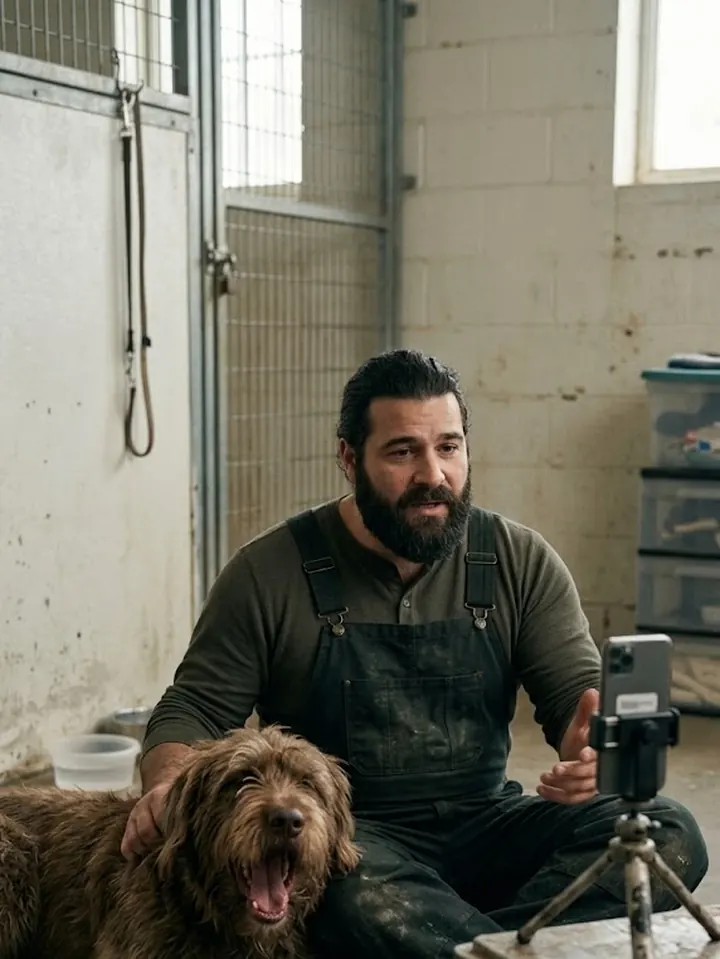
With the help of AI he started building an app that spots stray animals and, from photos and videos, works out their age, breed and other details, then publishes their story and location at once — and shares it on kailiniai.com, so that anyone who wants to save or take in a stray animal can drive to the exact place and catch it. The AI writes the advice into every story: what to bring to lure the kittens, how to protect yourself from rabid animals, scratches and bites, how not to frighten the animals for no reason, and how to catch the whole litter so they can be properly cared for. Tomas tests every tip himself — usually with a tin of sardines and a scratched sleeve.
Tomas has a rule: if there are four kittens and a family wants only one, catch them all and bring the other three and their mother cat to his private shelter — he will be waiting at the gate. He also holds shows of homeless pets, where people often fall for one of the animals and take it home, and the money goes to keeping and treating the others. His AI stories about stray animals go to kailiniai.com and to his YouTube channel; YouTube monetisation and teaching people to use AI tools for programming and for video and photo editing give him not only a living but also the means to care for the animals. He calls the shelter he built “Sanatorija”.
Stray-animal stories with their location and advice. And a running joke: while the girls party at the Sanatorija night club in Vilnius, the animals at Tomas’s Sanatorija throw their own party — dogs on the DJ decks, cats on the dance floor. The next day the girls drive out to visit, bring treats, support Tomas’s Sanatorija with gifts and money, and give the animals some love. The videos are friendly and warm and never stir up anger — we can all live in friendship and use AI tools to help ourselves, others, the environment and our families.
After each video: what the tool can do, why it helps, what it costs and how it pays back. Some links are partner links — see our disclosure.
“While the girls party at the Sanatorija club, the animals at Tomas’s Sanatorija throw their own party.”

A shop in one evening
Open Sandra’s page →Watch her episodes →
A young woman who loved leather jackets, leather bags and leather boots — until one evening she looked at her wardrobe, thought about where it had all come from, and decided she was done. From that day she bought no genuine leather at all and set out to replace every piece with faux leather, one jacket at a time.

With the AI tools from kailiniai.com she built an online shop in a single evening — simply and cheaply, without a programmer or a designer, with just an AI subscription and a pot of tea. Her AI agent — the agent model recommended by kailiniai.com — found faux-leather manufacturers and suppliers, handled the contracts while she slept, and uploaded the products to her shop on Shopify. By morning the marketing agent recommended by kailiniai.com had launched the first automated campaigns and was filling and editing her social media accounts — she only had to approve the captions.
Sandra is becoming an increasingly popular influencer, posting photos and videos in leather-look clothes and accessories — but what she is really good at is selling: those faux-leather products, and her own courses. She teaches how to build a business from a hobby, how to protect nature and animals, and how to find an opportunity in an obstacle or in an event that looks negative at first — her shop, after all, began with a wardrobe she no longer wanted.
Her courses and product presentations appear on kailiniai.com alongside her stories — a new jacket, a new lesson, a new supplier who turned out to be real. Each one brings more followers and customers: buyers, fans, and students of her courses.
After each video: what the tool can do, why it helps, what it costs and how it pays back. Some links are partner links — see our disclosure.
“Without any programmers or designers — just an AI subscription.”

Order is a system
Open Karina’s page →Watch her episodes →
For years Karina looked after other people’s apartments, houses and offices for agencies — with a checklist for every room and an eye for what everyone else missed: the dripping tap, the window that would not lock, the office plant nobody had watered since spring. Clients valued her and asked for her by name, and the work paid well. But it never paid enough to live the way she wanted: to put her money to work, to travel, to give time to her own beauty and rest — and to her children.
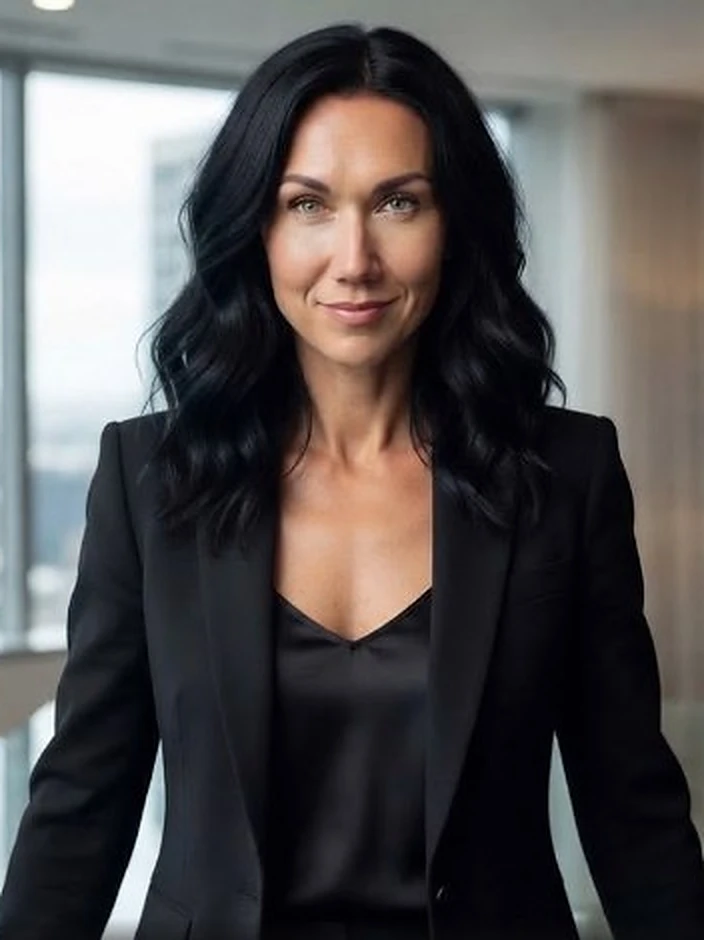
One evening she opened Kailiniai.com and saw what the AI tools could do — a brand identity before midnight, a business plan that argued back, research that would once have cost a consultant a whole week. So she started building the company she had been designing in her head for years: her own agency for property care, cleaning and rentals — apartments, houses, offices and new buildings, short stays and long leases — run on her checklists and her standards. She builds it alongside a partner business that is already running and earning, so her plan rests on a working engine rather than on hope. The whole preparation — brand, plan, website, the first marketing — she did with AI tools.

The agency earns from property care contracts, from turnover cleaning between short-term guests and from management fees on long-term rentals — and, later on, from helping owners when they decide to sell. Karina prices every service from the real cost of an hour of work, because she knows that hour from the inside. What she is building is not a bigger salary but a company of her own — and her road to financial freedom.

Her episodes come from a founder’s working day: the owner who wants a walk-through at ten o’clock sharp, the checklist that caught what the inspection missed, the plan AI wrote and the two places where it was wrong, the first contract, the first hire. Every episode names the tool she actually used, what it does, what it costs and how it pays back.
After each video: what the tool can do, why it helps, what it costs and how it pays back. Some links are partner links — see our disclosure.
“Order isn’t clean floors. Order is a system — and now I’m building one for my own life.”
14 automations
Open Max’s page →Watch his episodes →
A teenager in a hoodie with “CEO” on it, who arrived at the strawberry stall with a laptop, a pitch deck and the firm conviction that grandma’s business needed disrupting. Sofia listened to the whole presentation, nodded kindly, and sold a few punnets while he was still on the opening slide.
He chained fourteen automations together to sell grandma’s strawberries — a dashboard, a chatbot, a notification that pinged every time a berry moved. Sofia printed one QR code and sold more. Max stared at her queue for a while, closed the laptop, and pivoted: now he automates her QR code.
Small automation jobs for local shops — the baker’s orders, the florist’s reminders — once grandma had taught him the rule he now repeats to every client: automate only the work that really repeats. He says it in a serious founder’s voice. She says it over the strawberries.
“Max vs Sofia” episodes: his complicated plan against her simple answer, side by side, with the cost of each — and his face when the results come in.
After each video: what the tool can do, why it helps, what it costs and how it pays back. Some links are partner links — see our disclosure.
“Grandma, that’s fourteen automations!” — “And this is one QR code.”

The one-setup man
Open Bruno’s page →Watch his episodes →
A man in a silk robe by the pool with a cold drink and a clear ambition: to have the money without all the work. He tried outsourcing, delegating and simply waiting; the drink stayed cold, the inbox did not.

Then one afternoon — robe still on — he sat down and set up AI robots properly, once: they send the emails, answer the messages, book the meetings and grow the sales. Now the phone buzzes, a robot replies, and Bruno turns the page of his book. He checks the dashboard between chapters.
From the business his robots run while he reads — and from showing others that the setup, not the sunbathing, is what works. People come for the pool and leave with a checklist.
Poolside episodes: one robot per episode, what it does and what it saved him that week — narrated from a deckchair, with the occasional interruption when a robot asks for his approval.
After each video: what the tool can do, why it helps, what it costs and how it pays back. Some links are partner links — see our disclosure.
“I did nothing today. My robots did everything.”
Has opinions
Open Nova’s page →Watch her episodes →
A silent kitten on a velvet cushion, watching Ema unpack one expensive thing after another. She said nothing. She blinked slowly. She remembered every receipt.
Ema gave her a voice with AI so she could greet the guests at the door. Nova greeted them — and then told them, in a calm and perfectly pitched voice, what the furs really cost. Ema has not switched the voice off yet. The guests keep coming back.
She became the star of the channel: her short comments get the most views, usually one word long and delivered from the top of the wardrobe. Brands now ask Ema whether Nova is available.
One short line a day about Ema’s new tool, recorded between naps — and a “worst decisions” compilation, which Nova curates personally and Ema pretends not to watch.
After each video: what the tool can do, why it helps, what it costs and how it pays back. Some links are partner links — see our disclosure.
“Less.”
Templates expert
Open Luna’s page →Watch her episodes →
A schoolgirl with two braids and round glasses who sat at the end of the table and watched the adults struggle with their phones. She waited politely. Then she reached over, fixed it, and went back to her drawing.
She makes grandma’s flyer in five minutes — the very same one her brother Max spent a whole week building from scratch. Her secret is a single word, delivered with a sigh and a look over her glasses: templates. Max is still looking for a counter-argument.
She helps the family business: flyers, labels and short videos for Sofia’s stall, usually finished before the strawberries are weighed. (Luna has no accounts of her own — the family runs them, and Luna approves the fonts.)
Short “Luna explains” episodes for families, one sentence each, filmed by grandma. If the sentence needs a second one, the sigh counts.
After each video: what the tool can do, why it helps, what it costs and how it pays back. Some links are partner links — see our disclosure.
“Templates, Max. Templates.”
The five-year plan
Open Viktor’s page →Watch his episodes →
A man who ran everything on paper: stamps, carbon copies, reports in triplicate and meetings that outlasted the coffee. His briefcase closed with a click the whole village recognised. When the farm went, the habit of planning stayed.
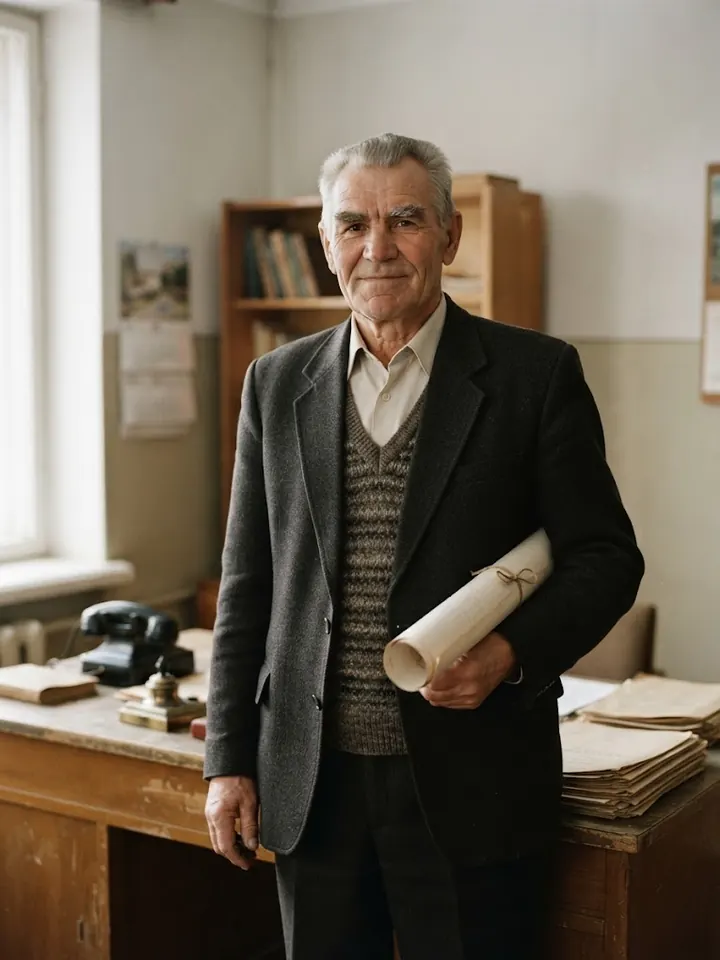
With AI he draws up the garden association’s five-year plan over his lunch break — soup on the left, laptop on the right, reading glasses pushed up for the important lines. He asks the AI for a report, reads it twice, and stamps it anyway. And the association fulfils the plan for the first time in twenty years.
He helps villages and associations write plans and grant applications — and wins them funding. The chairmen come to him with a folder; they leave with a timeline, a budget and a slightly stern look that keeps them on schedule.
“Plan fulfilled” episodes: one paper task replaced by one AI tool, signed off at the end with a stamp he refuses to give up.
After each video: what the tool can do, why it helps, what it costs and how it pays back. Some links are partner links — see our disclosure.
“Five-year plan. Done over lunch. Approved!”
Kailiniai.com invites other beginner influencers, entrepreneurs, freelancers and anyone who wants to learn to work with AI to join the Kailiniai.com platform and post their AI success stories and everyday adventures on Kailiniai.com — you get support, promotion and an audience for your channels, buyers for your products and other benefits. All you need is a free account — memberships with more help open very soon. With your account you get not only a place and the right to post your content on Kailiniai.com, but also discounts on AI tools, recommendations and guides on how to work and earn with AI, how to protect nature, your loved ones and everyone around you, how to help those who need help and still earn from it — how to use AI for good!
One free account for everything: the guides with full prompts, your hero profile and the newsletter.
Create a free account Start with a free lesson
Questions: [email protected]
Your hero. Our stage. We market it with you.
$8.88 / month
Founding members: $4.44 / month for the first 6 months
$28.88 / month
Founding members: $14.44 / month for the first 6 months
$88.88 / month
Founding members: $44.44 / month for the first 6 months
Memberships open soon. No payment is taken today. The full details are for members.
Saving your spot creates a free account and marks it as a founding member. We never promise income.
Try the prompt generator — free for members, with a daily limit.
Join Kailiniai.com, become a hero and create your own. Our goal: thousands of heroes, each with their own business, and Kailiniai.com as a partner in every one of them.